



Election Season: What Pastors Need to Know
By America Kimlinger
"Also, seek the peace and prosperity of the city to which I have carried you into exile. Pray to the Lord for it, because if it prospers, you too will prosper.” — Jeremiah 29:7
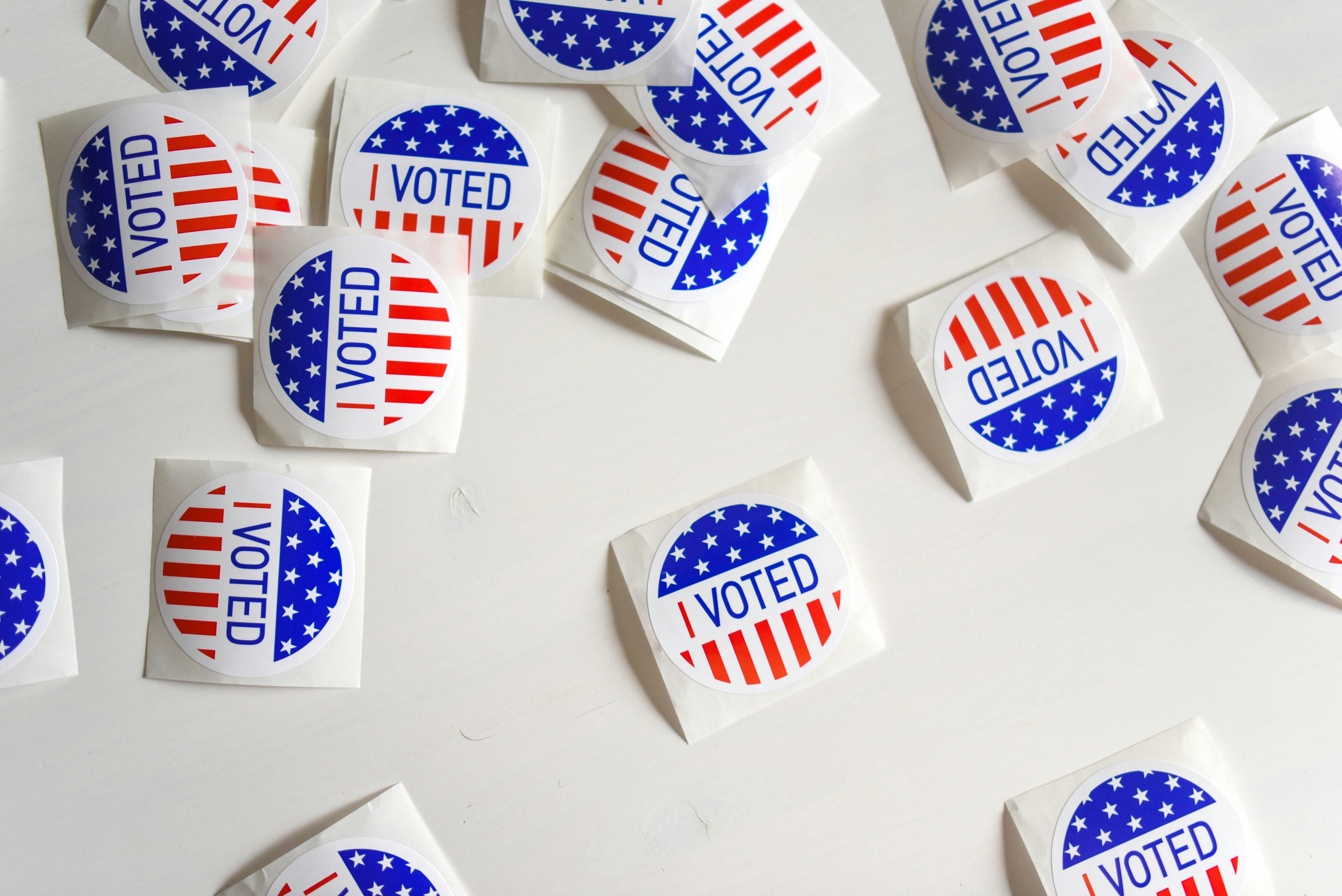
We are officially in election season.
Across neighborhoods and communities, the yard signs are up. Political commercials are filling our screens, debates are dominating the headlines, and our mailboxes are getting a workout from campaign flyers. With the primaries in full swing, conversations about politics are happening everywhere—from dinner tables to workplaces, and yes, even within our churches. Whether you are closely following or already feeling election-season fatigue, one thing is certain: politics is hard to ignore.
During this time, pastors and ministry leaders find themselves asking important questions:
Can our church host a candidate forum?
Can we discuss issues affecting our community?
Can a pastor share political opinions from the pulpit?
Can we encourage our congregation to vote?
These questions matter because the influence and role of religion in public life continue to be a significant topic of conversation across America. Recent research from the Pew Research Center shows that Americans continue to hold strong opinions about the role religion should play in government and public life, with many recognizing the influence of faith communities while also expressing clear expectations about the boundaries between churches and political activity.
The answer is not that churches must avoid public conversations or disengage from their communities. In fact, churches have always played an important role in serving and influencing the communities around them.
However, churches must understand the boundaries established for 501(c)(3) organizations.
What Does the Law Say?
Section 501 of the Internal Revenue Code states that no part of the net earnings of which inures to the benefit of any private shareholder or individual, no substantial part of the activities of which is carrying on propaganda, or otherwise attempting, to influence legislation (except as otherwise provided in subsection (h)), and which does not participate in, or intervene in (including the publishing or distributing of statements), any political campaign on behalf of (or in opposition to) any candidate for public office.
In essence, the law states that to maintain tax-exempt status, organizations cannot.
Voice their support for or opposition to a political candidate,
Use educational opportunities for the community as a platform to persuade voters to vote for one candidate or political party over another, nor
Conduct fundraisers to support a campaign financially.
Educational events and activities that encourage community members to exercise their civic duty are welcome and encouraged, as long as they are conducted in an unbiased and nonpartisan manner.
The goal is not to remove the church from public conversations. The goal is to ensure that a church’s influence is used to educate and serve rather than promote a particular candidate or political party.
What Churches Should Avoid During Elections
To protect your church’s tax-exempt status, avoid activities such as:
Endorsing or Opposing Candidates
A church cannot publicly support or oppose a candidate for political office.
This includes:
- Endorsements during church services
- Statements from church leadership representing the organization
- Campaign materials distributed through the church
While pastors maintain personal rights as citizens, they must be careful to distinguish personal opinions from official church activities.
Using Church Resources for Political Campaigns
Church facilities, funds, mailing lists, staff time, and other resources should not be used to support a political campaign.
Examples include:
- Hosting a fundraiser for a candidate
- Allowing campaign materials to be distributed through church channels
- Using church communication platforms to encourage support for a candidate
Providing Biased Voter Education
Churches can provide voter education, but it must remain neutral.
A voter guide should not:
- Favor one candidate over another
- Encourage voters to support a specific position
- Present information in a way that clearly promotes one side
The purpose should be to inform, not influence.
How Can a Church Make a Difference During Election Season?
Churches can participate in elections as long as their involvement is nonpartisan and educational. One of the best ways to support the electoral process is by providing voter education in a fair and unbiased setting.
Being nonpartisan means offering equal opportunities to all parties. For example, if one candidate is invited to speak during a well-attended Sunday service, the same opportunity must be extended to the opposing candidate. If the second candidate is only given a less attended Wednesday night event, this would not be considered fair treatment. Additionally, it's important to ask both candidates the same questions to avoid appearing to support or criticize one over the other.
Churches can also help by providing voters with neutral resources, such as information on all candidates and proposed laws. This encourages the community to participate in elections while ensuring that all shared information remains unbiased.
The IRS has the authority to revoke tax-exempt status if an organization violates these rules. While this is rare, they may issue penalties or require corrective actions.
Why This Matters Beyond Compliance
Protecting your church’s tax-exempt status is important, but compliance is about more than avoiding penalties.
It's about maintaining trust.
A church’s credibility is one of its greatest assets. When a community knows that a church is committed to truth, fairness, and integrity, its voice carries greater influence.
A Lifeway Research study found that only 29% of U.S. adults believe pastors publicly endorsing political candidates during church services is appropriate. This highlights the importance of carefully navigating political conversations while maintaining the trust of both your congregation and your community.
Be a Voice of Truth Without Losing Your Mission
The church has always played an important role in shaping communities, serving people, and bringing truth and hope into important conversations.
Election seasons do not change that calling.
If anything, they remind us of the opportunity churches have to be a trusted voice. But with influence comes responsibility. Wisdom requires understanding the boundaries that protect your ministry and ensuring that your church’s involvement remains consistent with its mission and 501(c)(3) requirements.
Your church can encourage civic engagement. Your church can provide education. Your church can help people understand the issues that impact their families and communities. The key is to do so in a way that informs rather than influences, and serves rather than supports a political agenda.
As you navigate this election season, consider how your church can be a place where people are equipped to engage thoughtfully, prayerfully, and responsibly.
At StartCHURCH, we help churches build strong foundations through proper structure, governance, and compliance. If you have questions about becoming a 501(c)(3) organization and how it can help you make a greater impact, call us today at 770-638-3444 or click the button below to have a compliance specialist contact you.
%schedule-a-call-cta%